Robotic Vacuum Cleaners for Australian Homes
A robotic vacuum cleaner takes the daily chore of floor maintenance off your hands entirely. Set a schedule, and the robot maps your home, cleans the floors, and returns to its charging dock when done, all without you lifting a finger. At Everyday Home Living, we stock a range of robot vacuums to suit different home sizes, floor types, and budgets, with fast delivery across Australia.
How Robotic Vacuum Cleaners Work
Robot vacuums use a combination of sensors and, on more advanced models, laser mapping (LiDAR) or camera-based navigation to move around your home systematically. Entry-level models use bump-and-redirect navigation, which is less efficient but perfectly functional in smaller, open-plan spaces. Mid to high-end models create a map of your home that you can view and edit in an app, allowing you to set no-go zones, schedule room-by-room cleaning, and track cleaning history.
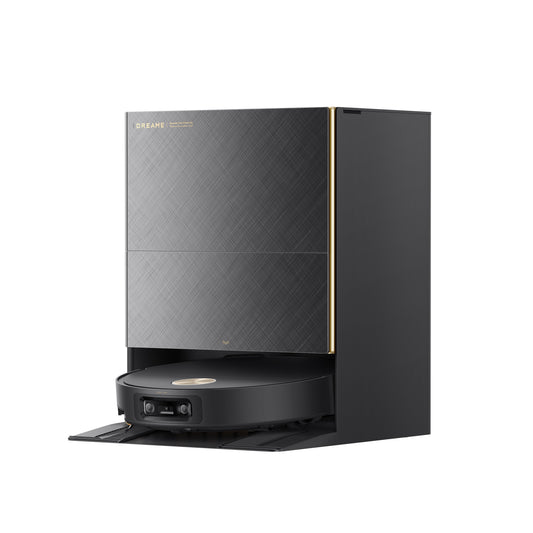
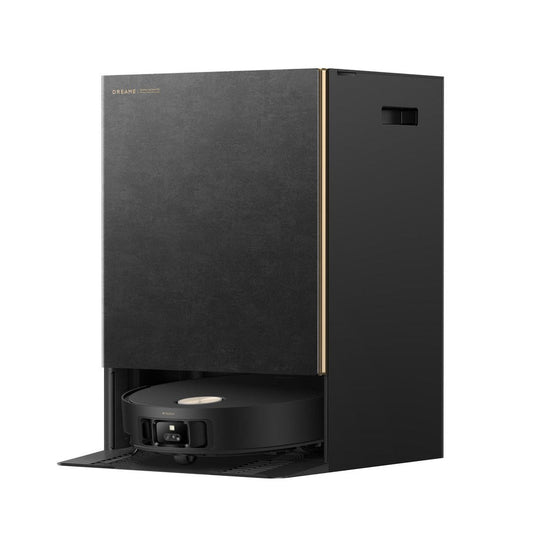
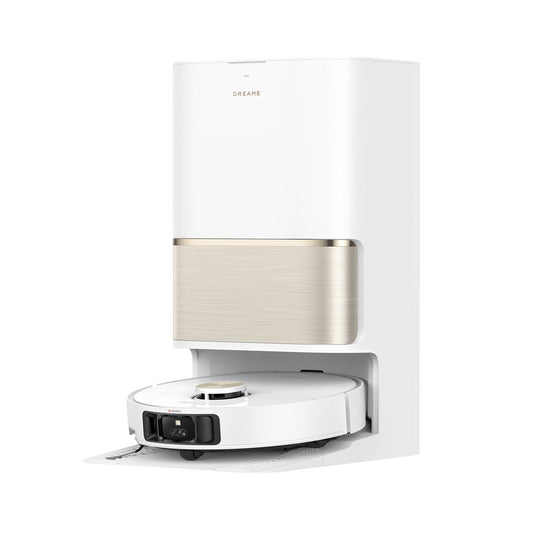
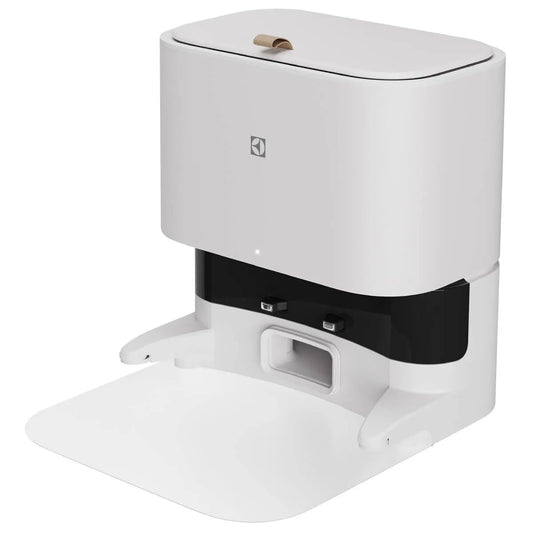
Most models connect to Wi-Fi and are controlled via a smartphone app or voice assistant. Scheduled cleaning means the robot can run while you are out, returning to its dock automatically to recharge. Some models with larger dock stations can also empty their own dustbin automatically, reducing how often you need to interact with the machine.
Key Features to Look For
Navigation Technology
LiDAR mapping navigation produces a precise floor plan of your home and cleans in efficient, systematic rows rather than random paths. This is worth the investment for larger homes or those with complex layouts. Camera-based navigation is a more affordable alternative that still produces good results in most homes. Basic bump navigation suits simple, open-plan layouts where systematic cleaning is less critical.
Suction Power
Robot vacuum suction is typically measured in pascals (Pa). For hard floors, 1,500 to 2,000 Pa is generally sufficient. For low-pile carpet, look for 2,500 Pa and above. High-end models reach 4,000 to 8,000 Pa and can handle medium-pile carpet effectively. Note that robot vacuums are not a replacement for a stick or barrel vacuum on thick carpet; they are best positioned as a daily maintenance tool.
Mopping Function
Many mid to high-end robot vacuums now include a mopping attachment that applies water to a cleaning pad to damp-mop hard floors simultaneously with vacuuming. This is useful for tiled kitchens and bathrooms. More advanced models lift the mop pad automatically when transitioning to carpet, preventing the carpet from getting wet.
Dustbin Capacity and Auto-Empty Docks
Standard robot vacuum dustbins hold between 200 and 600ml, which is sufficient for daily runs in most homes. Models paired with an auto-empty dock automatically transfer collected debris into a larger bag in the dock, meaning you only need to empty or replace the bag every few weeks rather than after every run. This is a worthwhile feature for busy households or those with pets.
Battery Life and Coverage
Most robot vacuums offer 90 to 180 minutes of run time per charge, covering 100 to 250 sqm per session. For larger Australian homes, look for models with auto-resume functionality: the robot returns to its dock to recharge mid-clean and then picks up where it left off without any input from you.
Robot Vacuums for Pet Hair
For households with pets, look for a robot vacuum with stronger suction (2,500 Pa and above), a rubber or tangle-resistant brush roll to prevent hair wrap, and HEPA or multi-stage filtration to capture pet dander. Auto-empty docks are particularly useful for pet owners as the dustbin fills faster with pet hair and frequent emptying is otherwise required.
Pairing a Robot Vacuum with a Manual Vacuum
A robot vacuum works best as part of a broader cleaning routine. Running a robot daily keeps floors consistently tidy, but a manual stick vacuum or barrel vacuum is still needed for edges, corners, stairs, upholstery, and deep cleaning sessions. Browse our full vacuum cleaners range to complete your cleaning setup.
Frequently Asked Questions
Are robotic vacuum cleaners worth it for Australian homes?
Yes, for most households. A robot vacuum running on a daily schedule dramatically reduces the visible dust and debris build-up on floors between manual cleans. They are particularly valuable in open-plan homes with hard floors, and in households with pets or children where floors get dirty quickly. They will not replace a stick vacuum or barrel vacuum for edge cleaning, stairs, or deep carpet work, but they significantly reduce how often those manual cleans are needed.
Can robot vacuums handle carpet?
Robot vacuums handle low-pile and medium-pile carpet well, particularly models with 2,500 Pa of suction and above. They are not suited to high-pile, shag, or very thick carpet as the cleaning head can struggle to maintain contact and the robot may get stuck. For thick carpet, a barrel vacuum or upright vacuum will deliver a far better result. If your home has a mix of hard floors and low-pile carpet, a robot vacuum handles the transition well.
Do robot vacuums work with pets?
Yes, and they are particularly useful in pet households because they keep hair and dander from accumulating between manual cleans. For best results with pets, choose a model with a rubber or tangle-resistant brush roll (to prevent hair wrap), suction of 2,500 Pa or above, and a good filtration system. An auto-empty dock is a practical addition as the dustbin fills faster when collecting pet hair and daily emptying without it becomes tedious.
What is LiDAR mapping and do I need it?
LiDAR (Light Detection and Ranging) mapping uses a rotating laser sensor to create a precise floor plan of your home. The robot uses this map to clean in systematic rows, avoid obstacles accurately, and let you set specific zones and schedules in an app. It is worth the investment for homes over 100 sqm, complex layouts, or if you want to set no-go zones for areas like pet bowls or charging cables. For smaller, open-plan homes, camera-based or even basic navigation can be entirely adequate.
How often should a robot vacuum run?
For most Australian homes, a daily run keeps floors consistently clean with minimal effort. In households with pets, children, or high foot traffic, daily cleaning is genuinely worthwhile. For quieter households with mostly hard floors, every second day is sufficient. Schedule the robot to run while you are out so noise is not a factor, and set up no-go zones in the app to keep the robot away from cords, small rugs it might get stuck on, and pet feeding areas.