Ceramic Cooktops for Australian Kitchens
Ceramic cooktops offer a smooth, flat cooking surface that is easy to clean and suits kitchens where gas is not available. With a sleek glass finish and radiant electric heating elements beneath, they are a practical and affordable option for Australian homes. Browse our range at Everyday Home Living with fast delivery nationwide.
How Ceramic Cooktops Work
Ceramic cooktops use radiant electric heating elements mounted beneath a smooth tempered glass-ceramic surface. When a zone is activated, the element heats up and radiates heat upward through the glass into the base of the pan. Unlike induction, the surface itself heats up as part of the cooking process, which means the glass will be hot during and after cooking. A residual heat indicator light stays on until the surface has cooled to a safe temperature.
Advantages of Ceramic Cooktops
The flat, seamless glass surface is easy to wipe clean as there are no grates, burner caps, or raised elements to work around. Ceramic cooktops are compatible with all flat-bottomed cookware including stainless steel, aluminium, and copper, with no need to check for magnetic compatibility as with induction. They are a reliable and cost-effective choice for kitchens without a gas connection.
Key Features to Look For
Zone Size and Layout
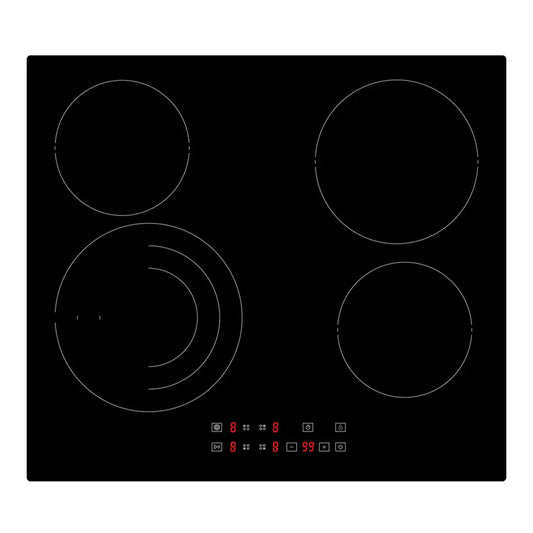
Standard 60cm ceramic cooktops have four zones in a variety of sizes to suit different pan diameters. Look for a layout that includes at least one large rear zone of 210mm or above for big pots, and a smaller zone for saucepans and simmering. Some models include an expandable dual zone that combines two elements for large cookware.
Touch Controls
Touch-sensitive controls are standard on modern ceramic cooktops. Look for models with a child lock function and clear heat level indicators. Slider controls allow smooth power adjustment without stepping through numbered levels.
Residual Heat Indicators
Residual heat indicators are an important safety feature as the glass surface retains heat well after the element is switched off. The indicator light (typically marked H) stays on until the zone cools to a safe temperature, warning you and anyone else in the kitchen not to touch the surface.
Cleaning and Care
Wipe spills from a ceramic cooktop promptly while the surface is still slightly warm but not hot. Spills that are allowed to cool and harden on the glass can be harder to remove and may cause permanent marks if burned on. Use a dedicated ceramic cooktop cleaner and a soft cloth or cooktop scraper for stubborn residue. Avoid abrasive pads or harsh chemicals that can scratch the glass surface.
Related Collections
Browse our full cooktops range to compare ceramic with induction, gas, and electric options. For ventilation, explore our rangehoods range.
Frequently Asked Questions
What is the difference between a ceramic cooktop and an induction cooktop?
Both use a smooth glass-ceramic surface, but they heat differently. A ceramic cooktop uses a radiant element beneath the glass that heats the surface and then the pan. An induction cooktop generates heat directly in the pan using electromagnetism, leaving the surface itself cool. Induction is faster, more energy-efficient, and safer as the surface stays cool. Ceramic cooktops work with all flat-bottomed cookware, whereas induction requires magnetic-based cookware. Ceramic is typically more affordable upfront.
Can I use any cookware on a ceramic cooktop?
Ceramic cooktops are compatible with all flat-bottomed cookware including stainless steel, aluminium, copper, and cast iron. The key requirement is a flat base that makes full contact with the cooking zone for efficient heat transfer. Warped or uneven pan bases reduce cooking performance and can cause uneven heating. Cast iron cookware works well on ceramic but should be lifted rather than slid across the surface to avoid scratching the glass.
Do ceramic cooktops scratch easily?
The glass-ceramic surface is relatively scratch-resistant under normal use, but it can be scratched by rough pan bases, abrasive cleaning pads, or sliding heavy cast iron cookware across the surface. Always lift rather than drag cookware. Clean with a soft cloth and a purpose-made ceramic cooktop cleaner. Avoid scouring pads, steel wool, and harsh chemical cleaners. Sand, salt, and sugar are also abrasive and should be wiped off before cooking if spilled on the surface.