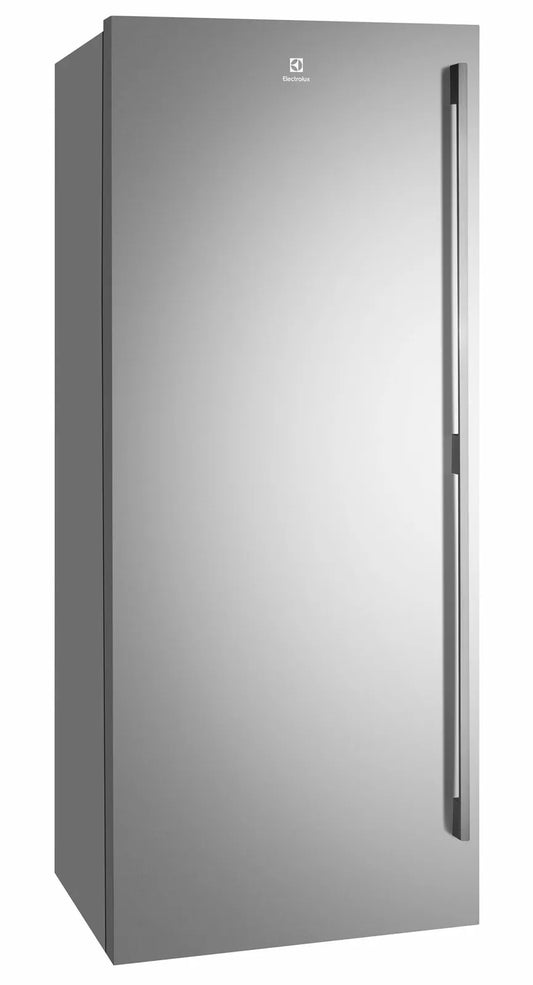
Vertical Freezers for Australian Homes
Vertical freezers (also called upright freezers) combine generous frozen storage capacity with the practical convenience of shelves, drawers, and door bins that make organising and accessing contents straightforward. With a front-opening door and a smaller floor footprint than a chest freezer of the same capacity, an upright freezer suits kitchens, laundries, and garages where floor space is at a premium. Browse our range at Everyday Home Living with fast delivery across Australia.
Upright Freezers vs Chest Freezers
The key advantage of an upright freezer over a chest freezer is accessibility and organisation. Internal shelving, drawers, and door bins allow you to clearly see and easily reach everything without burrowing through layers of frozen items. This makes upright freezers much more practical for everyday household use where you need to quickly find a specific item. The trade-off is slightly lower energy efficiency than a chest freezer of the same capacity, as a front-opening door allows more cold air to escape when opened compared to a top-opening lid. For households that prioritise convenience and organisation over maximum efficiency, an upright freezer is the better fit.
Key Features to Look For
Capacity
Upright freezers are available from around 80 litres for compact models to 300 litres and above for larger household or garage units. For a household of two to four using the upright as a supplementary freezer alongside the main fridge freezer, 120 to 200 litres is a practical range. For households relying primarily on the upright for all frozen storage, 200 litres and above is appropriate.
Frost-Free vs Manual Defrost
Frost-free upright freezers use a fan and periodic heating cycle to prevent ice build-up on the interior surfaces, maintaining consistent temperature throughout the cabinet and eliminating manual defrosting. This adds convenience and helps maintain food quality over time. Manual defrost models are more energy-efficient and less expensive but require periodic defrosting when ice accumulates. Most modern upright freezers offer a frost-free option and it is worth the premium for everyday household use.
Interior Configuration
Look for a combination of fixed and adjustable shelves, at least one pull-out drawer, and door bins with sufficient depth to hold ice cream containers, frozen vegetables, and other standard freezer items. Fast-freeze or super-freeze functions rapidly drop the freezer temperature to quickly freeze newly added items without affecting the temperature of existing contents.
Climate Rating
If installing the upright freezer in a garage in warmer Australian states such as Queensland, Western Australia, or Northern Territory, check the climate class rating. Standard models are rated for ambient temperatures of 10 to 32 degrees Celsius. A model with a tropical climate rating handles higher ambient temperatures safely and reliably.
Related Collections
Browse our full freezers range, including chest freezers for maximum capacity and efficiency. For the main kitchen fridge, explore our fridges range.
Frequently Asked Questions
Is an upright freezer better than a chest freezer?
It depends on your priorities. An upright freezer is easier to organise and access, uses a smaller floor footprint, and is more convenient for everyday household use. A chest freezer is more energy-efficient, provides more usable volume per dollar, and is better suited to bulk storage in a garage or storage room. For kitchens and laundries where you need quick and organised access to frozen goods, an upright is the better choice. For maximum storage and efficiency in a garage, a chest freezer is the stronger option.
Do upright freezers need to be defrosted?
Manual defrost upright freezers need to be defrosted when ice build-up reduces usable space or affects temperature performance, typically every 6 to 12 months. Frost-free models do not require manual defrosting as the automatic defrost cycle prevents ice from accumulating. If defrosting effort is a concern, choose a frost-free model. The energy cost of the frost-free function is offset by the convenience and the fact that frost-free models maintain more consistent internal temperature, which benefits food quality over time.